
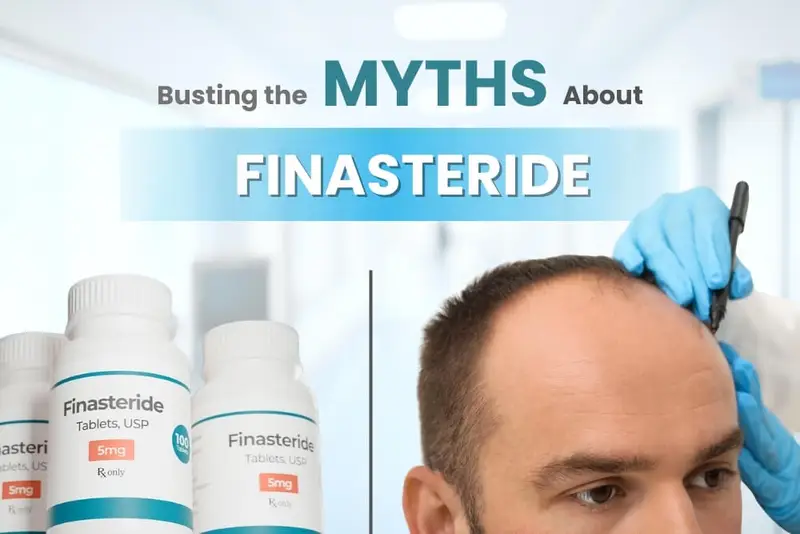
Busting the MYTHS about FINASTERIDE
Finasteride in Hair Fall Management and After Hair Transplant — Concise Overview
Androgenetic alopecia (male pattern hair loss) is driven by dihydrotestosterone (DHT), which gradually miniaturizes susceptible hair follicles. While hair transplantation restores lost hair, medical therapy is essential to control ongoing loss. Finasteride remains one of the most evidence-based treatments for this purpose.
How Finasteride Works
Finasteride blocks Type II 5-alpha reductase, the enzyme that converts testosterone into DHT. A daily 1 mg dose reduces DHT levels by about 60–70%, slowing follicle miniaturization, prolonging the growth phase, and helping preserve thicker hair.
Effectiveness in Hair Loss
Clinical trials show finasteride:
- Increases hair count and thickness
- Slows progression in ~80–90% of men
- Maintains benefits with long-term use (up to 5 years studied)
- Can partially reverse follicular miniaturization
It is considered a cornerstone therapy for male pattern hair loss.
Importance After Hair Transplant
A transplant moves DHT-resistant follicles but does not stop further loss of native hair. Without medical therapy, surrounding hair may continue thinning, reducing density and cosmetic balance.
Post-transplant finasteride helps:
- Preserve native hair
- Maintain overall density
- Improve long-term results
- Reduce need for repeat procedures
This is especially important in younger patients with progressive loss.
Topical Finasteride
Topical formulations aim to reduce scalp DHT with lower systemic absorption. Studies show:
- Significant scalp DHT reduction
- Hair growth benefits comparable to oral therapy in short-term trials
- Potentially lower systemic side-effect risk
Long-term data are still stronger for oral use.
Combination With Minoxidil
Finasteride (hormonal control) and minoxidil (growth stimulation) act through different mechanisms. Used together, they produce:
- Greater density gains
- Faster visible improvement
- Higher satisfaction rates
Combination therapy is often preferred, including after transplant.
Safety and Duration
Sexual side effects occur in about 1–3% of users, are usually mild, and typically reverse after stopping. Persistent symptoms are considered rare. Treatment must be continued long term; stopping usually leads to loss of maintained or regrown hair within 6–12 months.
Key Takeaway
Finasteride is a highly validated treatment for male pattern hair loss and a critical maintenance therapy after hair transplant. Oral and topical options, especially when combined with minoxidil, provide effective long-term stabilization when used under medical supervision.